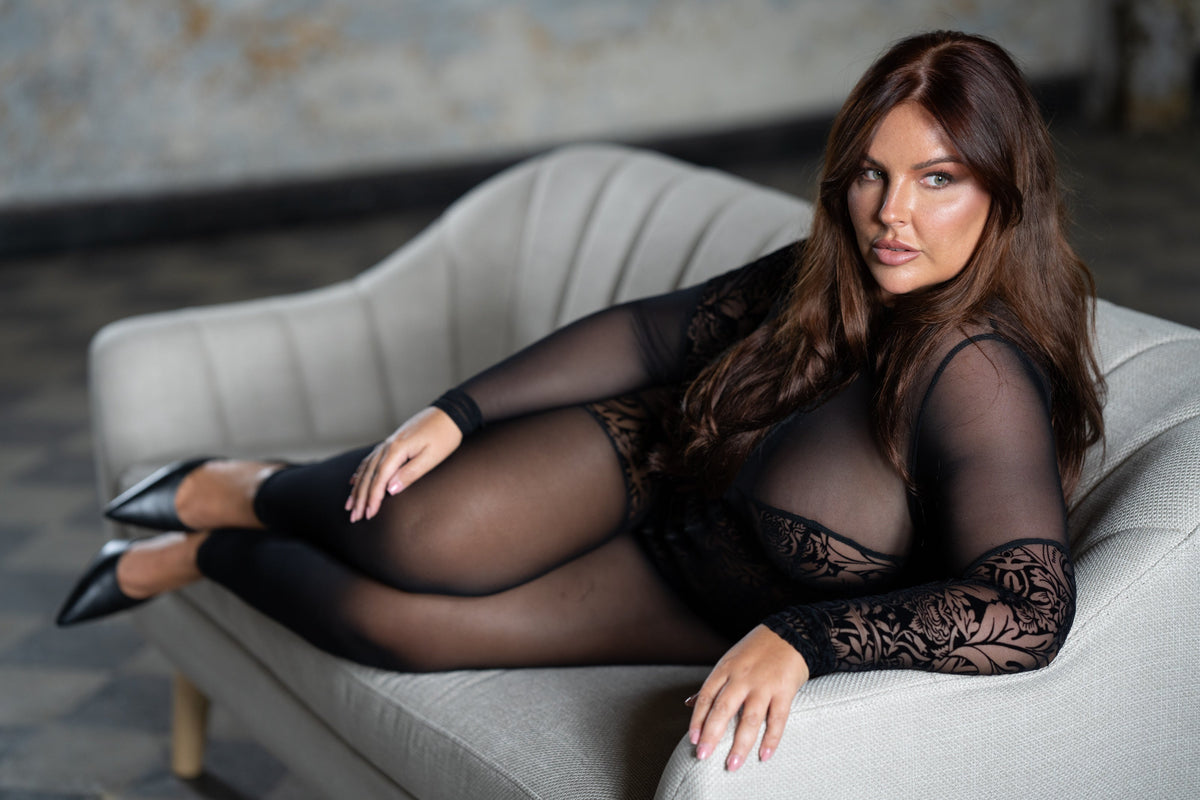
What does denier mean?
The Number That Determines How Your Legs Look
It appears on almost every package: 15 den, 20 den, 40 den. Denier is the most important clue you have about how a stocking or pair of tights will look, yet few people know exactly what it measures.
Denier is a unit of weight for yarn. It is the weight in grams of 9,000 meters of thread. If 9,000 meters of thread weighs 20 grams, that yarn is 20 denier. The higher the number, the heavier and therefore thicker the thread, and the more opaque the finished result.
Important to know: denier says something about the thread, not directly about the quality. A fine 15 denier made from good yarn will last longer than a poorly knitted 40 denier.
What to Expect from Each Thickness
8 to 15 denier, very sheer
This is the classic fine stocking. The skin remains clearly visible, and the color works more like a veil than coverage. Beautiful with an evening look and in warmer weather.
Keep in mind: the finer the yarn, the more delicate it is. A ring, a long fingernail, or a rough heel inside your shoe is enough to cause a run. Expect to put these on carefully.
20 to 30 denier, lightly opaque
The most commonly worn category, and not without reason. Your skin still shows through, but imperfections are less noticeable. Stronger than 10 denier while still refined.
If you want one pair in your wardrobe that goes with almost everything, 20 denier is the safest choice.
40 to 60 denier, clearly opaque
This is where the look changes. The skin is no longer visible, and the stocking takes on a color of its own, often with a soft matte sheen. Comfortable in autumn and under slightly shorter skirts.
70 denier and higher
Fully opaque and noticeably warmer. From around 100 denier onward, the feel is closer to that of thin leggings than classic tights.
Why the Same Denier Can Look Different
Two pairs of 20-denier tights can look quite different. This is due to three factors.
- The knitting technique. A denser knit provides more coverage with the same yarn.
- The type of yarn. Nylon has a different sheen from a heathered yarn with elastane.
- The stretch. On a longer leg, the same fabric is stretched further and therefore becomes more transparent. That is exactly why choosing the right size is more important than many people think.
Which Denier Should You Choose?
| Occasion | Advice |
|---|---|
| Evening, special occasions, parties | 10 to 20 denier |
| Work and everyday wear | 20 to 40 denier |
| Autumn and winter | 40 to 80 denier |
| Cold days, with warmth as the priority | 100 denier or higher |
A practical tip: keep two thicknesses in your drawer. A sheer pair for evenings and an opaque pair for everyday wear. That will cover most of the year.
What About Stockings and Hold-Ups?
Denier works exactly the same way for stockings and hold-ups as it does for tights. However, the thickness is often more noticeable in stockings because the top or lace band creates a contrast with the leg beneath it.
With classic nylon stockings, you also see lower deniers more often, because the vintage look is closely associated with fine yarn.